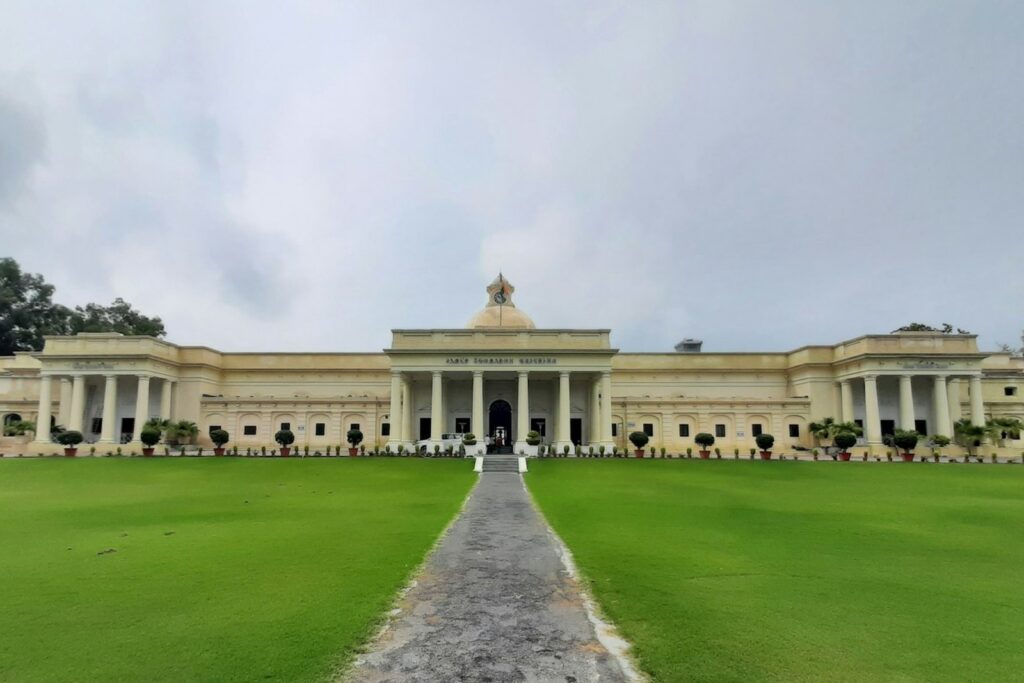
India has more universities in Asia’s rankings than ever, but its best-known institutions are sliding down the table. In the QS Asia University Rankings 2027, published on 3 November, no Indian university made the top 50 for the second year running, and all six of the country’s leading institutes lost ground.
The Indian Institute of Technology (IIT) Delhi remained India’s highest-ranked university but fell to 66th from 59th. The Indian Institute of Science in Bengaluru dropped to 79th from 64th, IIT Bombay to 83rd from 71st, IIT Madras to 85th from 70th, IIT Kharagpur to 90th from 77th and IIT Kanpur to 97th from 77th, ThePrint reported. The last time Indian universities reached the top 50 was in 2024, when IIT Delhi was 44th and IIT Bombay 48th.
At the same time, the number of ranked Indian institutions rose to 325 from 291, with 34 new entries, giving India the second-largest presence in the table after mainland China, which has 448. The ranking covers 1,722 universities across Asia, according to QS.
QS said the falls were partly relative. “Two-thirds of the Indian universities that dropped in rank improved their overall scores,” it said, because other universities in the region improved faster. Even so, the detailed data point to weaknesses. Among Indian universities that could be compared with last year, 76% fell on academic reputation, 83% on employer reputation, 85% on the proportion of international students and 77% on citations per paper.
There are bright spots. Seven Indian institutions scored above 90 for academic reputation, up from six last year, and employers rate IIT graduates highly: IIT Bombay is seventh in Asia for employer reputation and IIT Delhi tenth. “The challenge now is to translate this strength more consistently into research impact and international recognition,” said Ben Sowter, a senior vice-president at QS.
India’s experience mirrors a wider shift in the region. Universities in Hong Kong and mainland China pulled ahead in this year’s table, while Singapore’s top two universities also slipped out of the top five. For students weighing up universities, rankings measure reputation, research and internationalisation rather than the quality of teaching on a particular course, so they are best read alongside programme details, costs and graduate outcomes.
Sources: QS Quacquarelli Symonds, QS World University Rankings: Asia 2027, 3 November 2026; ThePrint, 3 November 2026. Checked on 24 November 2026.