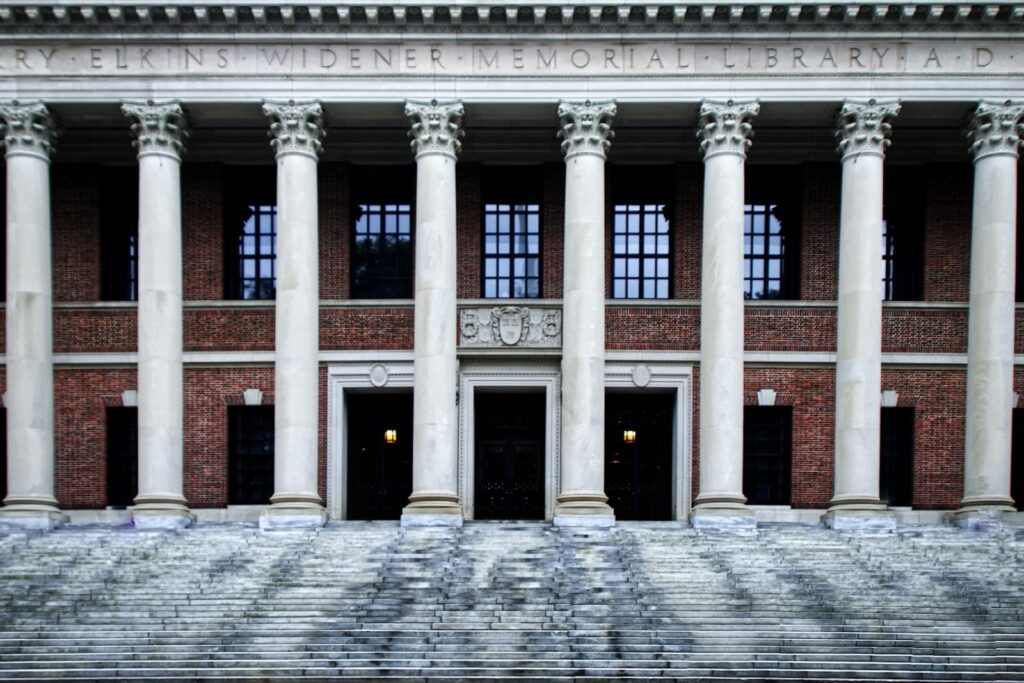
Harvard University is trying to rebuild its reputation for open debate and academic rigour after one of the most turbulent periods in its history, and some of its best-known professors say the effort is starting to work.
Since the protests that followed the Hamas attack on Israel in October 2023, the university has faced the resignation of a president, a long dispute with the Trump administration over federal funding, and criticism that its classrooms had become places where students were afraid to speak. Under President Alan Garber, who took charge in January 2024, Harvard has responded with a series of changes to how it teaches, grades and handles disagreement.
“I do think there’s a change,” the psychologist Steven Pinker, who has taught at Harvard for more than 20 years, told the New York Post. He said earlier leaderships had been focused on avoiding scandal, rather than asking what the university was for.
Some of the changes concern the university’s own voice. In 2024 Harvard decided that it would no longer issue official statements on public controversies unless they directly affect its core work, a break from past practice after events such as the murder of George Floyd. It also tightened its rules on protest, which are no longer allowed inside libraries, classrooms, dormitories and dining halls.
Others reach into the classroom. Faculty in Arts and Sciences added language to the student handbook making clear that a student’s political views must not affect their grades, and several of Harvard’s schools now ask students not to attribute classmates’ comments outside class, according to the Harvard Gazette. The aim is to make students feel freer to test ideas they might later abandon. Course evaluations now ask whether instructors encouraged competing viewpoints.
Santiago Romero-Brufau, a professor of biostatistics, said the atmosphere had noticeably eased. “A few years ago, it was much more tense,” he told the Post. Ned Hall, a philosophy professor who helped found Harvard’s faculty Council on Academic Freedom in 2023, said students were growing tired of a culture in which “you have to really watch what you say”.
The changes now begin before students arrive. Applicants since the Class of 2029 have been asked to write an essay about a time they strongly disagreed with someone, and new undergraduates complete orientation modules on constructive disagreement.
Tougher grades, and exams built for the age of AI
Harvard is also tackling grade inflation. An internal review found that the median graduating grade point average rose from 3.56 to 3.83 in 15 years, and more than 60% of undergraduate grades in 2024–25 were A’s. In May the faculty voted to cap A grades at 20% of students in each undergraduate course, with a small allowance for extra A’s. The cap formally takes effect in autumn 2027, although many professors have already begun grading more strictly.
“Not enough, [but] it’s a start,” Pinker said of the cap. He has also begun taking attendance in large lectures for the first time in his career. Meanwhile, Harvard’s Derek Bok Center for Teaching and Learning is helping staff redesign assignments to resist misuse of artificial intelligence, including through in-person and oral examinations.
Outside observers have noticed. Harvard came last in the annual free speech rankings of the Foundation for Individual Rights and Expression (FIRE) in recent years, but now ranks 71st out of 261 colleges, the Post reported. FIRE’s Laura Beltz warned that the hard part will be keeping the culture alive as each new class arrives.
Not everyone on campus has welcomed every change. Nearly 85% of undergraduates who responded to a student government survey opposed the grade cap, and student leaders said their voices had not been “centered” in the decision, The Harvard Crimson reported. Pro-Palestinian students have argued that some of the new protest rules restricted their own speech, The Christian Science Monitor reported.
For students applying to Harvard, and to other leading US universities watching its example, the direction is clear: expect a stronger emphasis on debate in admissions and the classroom, fewer easy A’s, and more assessment that cannot simply be completed with an AI tool.
Sources: New York Post, 5 November 2026; Harvard University, Institutional Voice report, May 2024; Harvard Gazette, 17 November 2025; The Harvard Crimson, 20 May 2026; The Christian Science Monitor, 7 October 2026; FIRE, 2027 College Free Speech Rankings. Checked on 5 November 2026.