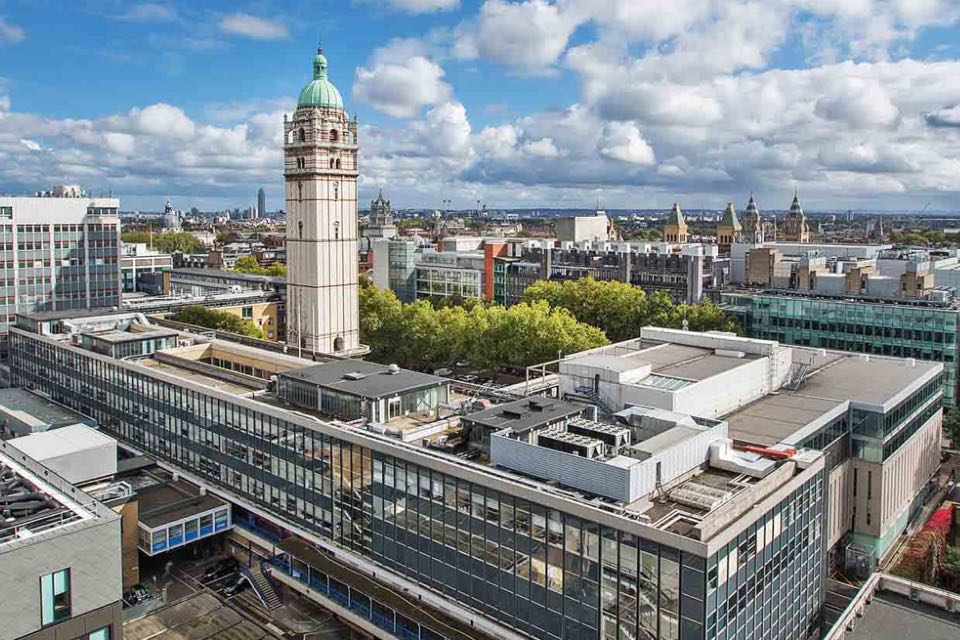
Imperial College London, one of the UK’s leading research universities, is offering 50 fully funded PhD scholarships for the 2027/28 academic year through its prestigious President’s PhD Scholarships programme. These scholarships are open to outstanding students from around the world, including international applicants, and provide full tuition fee coverage, an annual living stipend of £27,036, and an additional £2,000 per year towards research consumables for the first three years. With funding available for 3.5 years, this is an excellent opportunity for students who wish to pursue doctoral research in the United Kingdom without the financial burden of international tuition fees.
Author: Dr Niaz Chowdhury (LinkedIn)
Designation: Lecturer (Computer Science)
Affiliation: Ulster University (Birmingham), UK
The President’s PhD Scholarships are designed to attract exceptionally talented students with strong academic achievements and outstanding research potential. Successful candidates can undertake research in their chosen area, working under the supervision of an academic at Imperial College London.
One of the most attractive features of this programme is that there are no general nationality restrictions. Students from Bangladesh, India, Pakistan, Nepal, Nigeria, Ghana, Kenya, Sri Lanka and other countries worldwide are welcome to apply, provided they meet the academic and departmental requirements.
The University has announced three application rounds for the 2027/28 academic year, with deadlines on 2 November 2026, 11 January 2027 and 1 March 2027.
In this article, we explain the scholarship benefits, eligibility requirements, application process, important deadlines, selection criteria and practical tips for preparing a competitive application. We have also included a Frequently Asked Questions section to help international students understand the opportunity before applying.
Scholarship Overview
| Scholarship Information | Details |
|---|---|
| Scholarship name | President’s PhD Scholarships |
| University | Imperial College London |
| Country | England, United Kingdom |
| Study level | PhD / Doctoral Research |
| Number of scholarships | 50 |
| Academic year | 2027/28 |
| Eligible applicants | UK and international students |
| Tuition fees | Fully covered |
| Annual living stipend | £27,036 |
| Additional research funding | £2,000 annually for the first 3 years |
| Funding duration | 3.5 years |
| Study mode | Full-time or part-time |
| Earliest funded start date | 1 August 2027 |
| Latest funded start date | 1 November 2027 |
| First application deadline | 2 November 2026 |
| Second application deadline | 11 January 2027 |
| Third application deadline | 1 March 2027 |
| Selection criteria | Academic excellence and research potential |
What does the President’s PhD Scholarship cover?
One of the most significant advantages of the President’s PhD Scholarships is the generous financial support provided to successful candidates.
Studying for a PhD in London can involve substantial expenses, particularly for international students who would otherwise have to pay overseas tuition fees.
The President’s PhD Scholarships address these financial challenges by providing tuition fee coverage, a living stipend and additional support for research activities.
1. Full tuition fee coverage
Successful applicants receive full funding for their PhD tuition fees throughout the funded period.
Importantly, the scholarship is open to international students, and the full tuition fee award applies to successful candidates with overseas fee status.
This is a substantial benefit because international PhD tuition fees at leading UK universities can be considerably higher than those charged to domestic students.
The tuition fee coverage allows successful scholars to concentrate on their research without needing to fund their tuition fees independently.
2. Annual living stipend of £27,036
In addition to tuition fee coverage, successful applicants receive an annual living stipend of £27,036 for the 2027/28 academic year.
This stipend is intended to support students with their living expenses while studying and conducting research in London.
When divided into twelve equal portions, the annual stipend is equivalent to approximately £2,253 per month.
The stipend can help students manage expenses such as accommodation, food, local transport and other day-to-day living costs.
However, London is an expensive city, and applicants should carefully consider their individual living requirements before relocating.
The amount of funding available for part-time study may differ according to the applicable scholarship conditions.
3. Additional £2,000 annual research consumables fund
Another attractive feature of this scholarship is the provision of £2,000 per year towards research consumables for the first three years.
This represents a total potential allocation of £6,000 in research consumables support.
Depending on the research project and applicable expenditure rules, this fund may support eligible research-related costs, such as consumable materials and other necessary project resources.
Importantly, the consumables fund is separate from the living stipend.
It should not be treated as an additional personal living allowance.
4. Funding for 3.5 Years
The President’s PhD Scholarships provide support for 3.5 years of doctoral study.
This allows students to undertake a substantial period of research while receiving scholarship funding.
Students should discuss the expected duration and structure of their PhD programme with their prospective supervisor and academic department.
5. Professional Development and Research Support
Beyond financial support, President’s PhD Scholars benefit from a programme of opportunities and events delivered by Imperial’s Early Career Researcher Institute.
Scholars also have access to the wider range of postgraduate support and professional development opportunities offered by the University.
These may include:
- Research training and professional development
- Opportunities to interact with other doctoral researchers
- Academic and research career development
- Specialist learning and development activities
- Support services for international students
- Support for disabled students
- Networking and research community activities
These opportunities can be particularly valuable for students planning to pursue academic careers, postdoctoral research or research-intensive roles in industry.
What expenses are not necessarily covered?
Although the President’s PhD Scholarships provide substantial financial support, applicants should not assume that every expense associated with international study is included.
Students may still need to budget for:
- UK Student visa application fees
- Immigration Health Surcharge
- International travel
- Accommodation deposits
- Relocation expenses
- Personal and family-related expenses
Unless Imperial explicitly confirms additional financial support for these costs, applicants should plan to cover them separately.
Can international students apply?
Yes. The President’s PhD Scholarships are open to talented applicants from around the world.
Imperial College London explicitly states that there are no general restrictions on nationality.
This means that eligible students from Asia, Africa, Europe, the Americas and other regions may apply.
However, the University also notes that some academic departments may be unable to support international applicants.
Students should therefore confirm the relevant departmental requirements before preparing an application.
Academic Requirements
The President’s PhD Scholarships are highly competitive and have stricter academic requirements than many standard PhD programmes.
Applicants must satisfy one of the following academic conditions.
Option 1: First-Class Undergraduate Degree
Candidates must have obtained, or be expected to obtain, a first-class undergraduate degree or an equivalent qualification.
This requirement also applies to applicants whose highest qualification is an integrated master’s degree.
Option 2: Distinction in a Standalone Master’s Degree
Applicants who have not achieved a first-class undergraduate degree may still be eligible if they have obtained, or are expected to obtain, a distinction in a standalone master’s degree.
This is particularly important for international applicants who performed well during postgraduate study but did not achieve the equivalent of a UK first-class degree at undergraduate level.
For example, a student who achieved a second-class undergraduate degree but subsequently completed a master’s degree with distinction may be eligible under the programme’s academic criteria.
However, international qualifications are not always classified in the same way as UK degrees.
Applicants should contact the relevant Imperial admissions team to confirm whether their academic results meet the scholarship requirements.
What if my academic grades do not meet the standard requirements?
Imperial recognises that some academically talented students may have experienced circumstances that affected their examination results.
Departments may recommend exceptional applicants as special cases where extenuating circumstances explain why the standard academic criteria were not met.
Candidates may be able to demonstrate their research capability through other evidence, including:
- Strong performance in research-based modules
- Outstanding dissertation results
- Research placements
- Significant research experience
- Other evidence of exceptional academic or research potential
Applicants wishing to be considered through this route should contact their proposed academic department before applying.
Importantly, special-case consideration is not automatic and does not guarantee that an applicant will be nominated.
Applicants from non-traditional academic backgrounds
Imperial also encourages applications from candidates who have followed non-traditional academic or professional pathways.
The University recognises that strong research potential can develop through different educational and career experiences.
Candidates with relevant professional experience or unconventional academic backgrounds may therefore be considered, subject to the University’s scholarship selection procedures.
Can current Imperial PhD students apply?
No.
The President’s PhD Scholarships are available only to new PhD applicants.
Students who are already registered for a PhD at Imperial College London are not eligible for consideration under this scheme.
Which research areas are eligible?
One of the most attractive aspects of the President’s PhD Scholarships is the opportunity for successful applicants to pursue research in an area of their choosing, subject to departmental support and the availability of an appropriate supervisor.
Imperial College London is particularly well known for its strengths in science, engineering, technology, medicine and business-related research.
Depending on the availability of supervisors and departmental programmes, applicants may find opportunities in fields such as:
- Artificial Intelligence and Machine Learning
- Computer Science and Computing
- Data Science and Statistics
- Electrical and Electronic Engineering
- Mechanical Engineering
- Civil and Environmental Engineering
- Chemical Engineering
- Mathematics
- Physics
- Chemistry
- Biological Sciences
- Medicine and Healthcare Technologies
- Materials Science
- Environmental Science and Climate Research
- Business, Management and related research areas
These are examples of broad research disciplines available at Imperial, rather than a guaranteed list of scholarship places.
Applicants should explore the University’s academic departments and research groups to identify suitable opportunities.
Unlike some scholarships attached to a single predefined research project, this programme allows candidates to develop a research proposal in consultation with a prospective supervisor.
However, applicants must obtain the agreement of an eligible Imperial supervisor before submitting their application.
How to apply for the President’s PhD scholarships
The application process for the President’s PhD Scholarships is different from that of many other UK scholarship programmes.
Most importantly, there is no separate scholarship application form.
Applicants submit a PhD admission application through Imperial’s online admissions system and indicate that they wish to be considered for the President’s PhD Scholarship.
The relevant academic department reviews the application and may nominate outstanding candidates for the scholarship competition.
The following step-by-step guide explains the process.
Step 1: Identify your research area
Begin by deciding the field in which you wish to pursue doctoral research.
Your research area should reflect your academic background, research interests and long-term career objectives.
For example, an applicant with a background in Computer Science may wish to investigate Artificial Intelligence, Machine Learning, Natural Language Processing, Cybersecurity or another area aligned with Imperial’s research expertise.
Students with backgrounds in Engineering, Medicine, Mathematics, Chemistry or other disciplines should similarly identify a suitable area of research.
At this stage, it is useful to develop a preliminary understanding of the research questions you would like to investigate.
Step 2: Find a suitable PhD supervisor
This is one of the most important stages of the application process.
Imperial requires applicants to have contacted an academic supervisor who has agreed to supervise their proposed research project before applying.
Applicants should therefore begin by exploring the academic staff profiles and research groups within their chosen department.
Look for academics whose research interests closely match your proposed project.
Read their recent publications and consider how your research ideas may complement their ongoing work.
A strong match between your interests and the supervisor’s expertise can be particularly important.
Important: Under the scholarship rules, supervisors are limited to supervising one President’s PhD Scholar at any one time.
Imperial maintains information about supervisors who are currently unavailable under the scheme.
Applicants should review this information before approaching potential supervisors.
Step 3: Contact your potential supervisor
Once you have identified a suitable academic, prepare a professional introductory email.
Your email should be concise and explain:
- Your name and academic background
- Your current or most recent qualification
- Your proposed research interests
- Why you are interested in the academic’s research
- A brief description of your proposed research topic
- Your intention to apply for the President’s PhD Scholarship
You may attach an academic CV and a short research summary.
Avoid sending identical generic emails to large numbers of academics.
A personalised message demonstrating genuine familiarity with the supervisor’s research is more likely to establish a meaningful academic conversation.
If the supervisor is interested, they may arrange a discussion about your research ideas and suitability for doctoral study.
You should proceed with the scholarship application once the prospective supervisor has agreed to supervise your proposed research.
Step 4: Prepare your two-page personal statement and research proposal
Imperial has a specific requirement concerning the personal statement submitted through its admissions system.
Applicants should prepare a two-page document with the following structure.
Page 1: Personal Statement
The first page should explain your motivation for applying to Imperial College London and the President’s PhD Scholarships programme.
You may discuss:
- Your academic background
- Your research interests and motivation
- Relevant academic achievements
- Previous research experience
- Why Imperial is the right environment for your research
- Your long-term academic or professional ambitions
- Other information supporting your suitability for the scholarship
The personal statement should go beyond simply listing achievements already included in your CV.
Instead, explain how your academic experiences have prepared you to undertake doctoral research.
Page 2: Research Proposal
The second page should provide an overview of the research you intend to conduct.
Depending on your field, you may wish to include:
- Proposed research title
- Research background
- Research problem or gap
- Research questions or objectives
- Proposed methodology
- Expected academic or practical contribution
- Alignment with your proposed supervisor’s expertise
Because this document has a strict two-page structure, applicants should write concisely and focus on the most important information.
Imperial encourages applicants to write in the first person.
If your academic department requires a more detailed research proposal, you should submit that additional document using the research proposal option in the supporting documents section.
Step 5: Arrange two academic references
Applicants must provide the names of two academic referees.
The referees should be individuals who can comment meaningfully on your academic performance and research potential.
Suitable referees may include:
- Undergraduate dissertation supervisors
- Master’s dissertation supervisors
- Academic tutors
- Lecturers familiar with your academic work
- Researchers who have supervised your previous research
Your proposed Imperial PhD supervisor must not be one of these two referees.
Applicants should contact their referees well before the application deadline.
Provide them with information about the scholarship, your proposed research and your relevant academic achievements.
This will help them prepare informed and relevant references.
Step 6: Submit your PhD application online
Once you have confirmed supervisory support and prepared the necessary documents, submit your PhD admission application through Imperial’s online application system.
You must follow the admission requirements for your chosen academic department.
During the application process, you will be asked to provide academic information, supporting documents and references.
Most importantly, you must select the President’s PhD Scholarship option in the funding section of the additional questions tab.
This is the step that identifies your application for consideration under the scholarship scheme.
Failing to select the appropriate funding option could prevent your application from being considered for the scholarship.
There is no separate President’s PhD Scholarship application form.
Step 7: Departmental review and shortlisting
After submission, your application will be reviewed by the academic department.
The department will assess your qualifications, academic achievements, research experience and potential for doctoral study.
Departments select outstanding applicants to put forward for scholarship consideration.
Some candidates may be invited to attend an interview as part of the departmental assessment.
Applicants should be prepared to discuss their research proposal, previous academic work and reasons for choosing Imperial.
Step 8: Final scholarship selection
Shortlisted applications are considered through Imperial’s scholarship selection process.
The final selection involves Faculty-level assessment and a College Selection Panel.
The panel considers evidence of academic excellence and research potential.
A departmental nomination does not guarantee that an applicant will receive a scholarship.
Successful candidates will receive written confirmation of their scholarship award.
Applicants who are not selected for the President’s PhD Scholarship will automatically be considered for a standard PhD place.
However, a standard PhD offer does not necessarily include funding.
Application Deadlines for 2027/28
Imperial College London has announced three scholarship selection rounds for the 2027/28 academic year.
This means applicants have more than one opportunity to submit their applications.
However, applications must be completed by the relevant deadline, and applicants should confirm their proposed department’s requirements.
| Application Round | Application Deadline | Scholarship Notification |
|---|---|---|
| Round 1 | 2 November 2026 | By 31 January 2027 |
| Round 2 | 11 January 2027 | By 15 April 2027 |
| Round 3 | 1 March 2027 | By 31 May 2027 |
All application deadlines are at 23:59 UK time.
First Deadline: 2 November 2026
The first application deadline is particularly important for students who have already identified a suitable supervisor and prepared their application materials.
As of 28 October 2026, this deadline is only five days away.
Applicants who are ready should prioritise completing their applications before the deadline.
However, international students who have not yet secured supervisory agreement should avoid submitting an incomplete or poorly prepared application simply to meet the first round.
Second Deadline: 11 January 2027
The second round provides an opportunity for applicants who require additional time to identify supervisors, develop research proposals and prepare their academic documents.
This may be a more practical target for international students beginning their preparations in late 2026.
Third Deadline: 1 March 2027
The final published application round closes on 1 March 2027.
Applicants considering this round should still begin preparing well in advance, particularly because contacting and securing the agreement of a suitable supervisor may take time.
When can scholarship recipients start their PhD?
For the 2027/28 academic year, Imperial has specified the following funded start dates:
- Earliest start date: 1 August 2027
- Latest start date: 1 November 2027
Successful applicants should agree on an appropriate start date with their academic department, taking into account admissions requirements and any necessary immigration arrangements.
How are scholarship recipients selected?
The President’s PhD Scholarships are awarded through a competitive selection process.
Imperial assesses candidates primarily on two important dimensions.
1. Academic Excellence
Academic excellence is assessed using evidence such as:
- Previous academic results
- Undergraduate and postgraduate transcripts
- Relative position within the applicant’s class
- Academic prizes and awards
- Distinctions and other achievements
Applicants with consistently strong academic performance are likely to be competitive.
However, academic results are considered alongside research potential, and Imperial also recognises exceptional applicants from non-traditional pathways.
2. Research Potential
Research potential is a central part of the selection process.
Imperial considers evidence such as:
- Previous research experience
- Interest in scientific or academic discovery
- Quality of the proposed research plan
- Potential contribution of the proposed research
- Departmental assessment
- Performance at interview, where applicable
A candidate with excellent grades but an unclear research direction may be less competitive than expected.
Similarly, a strong research proposal must be supported by evidence that the applicant has the academic preparation and research capability necessary to undertake doctoral work.
The strongest applications will demonstrate both academic excellence and a convincing potential to contribute to new knowledge.
Practical tips for international students
The President’s PhD Scholarships are highly competitive, with only 50 awards available.
Therefore, international applicants should approach the application strategically.
1. Start with supervisor selection
Do not begin by writing a lengthy research proposal without first investigating the research interests of potential supervisors.
Explore the academic profiles of Imperial researchers and identify those whose work closely matches your interests.
Read relevant recent publications and develop a clear understanding of their research.
This will help you prepare a better-informed proposal and a more convincing introductory email.
2. Demonstrate research potential, not just academic grades
Strong academic performance is essential, but it is not the only consideration.
Explain what you have learned through previous research projects, dissertations, publications or professional experience.
If you have worked on technically challenging projects, discuss the research skills you developed.
For example, an applicant from Artificial Intelligence may highlight experience in developing machine learning models, designing experiments, evaluating research results or investigating limitations in existing techniques.
The objective is to demonstrate your ability to undertake independent research.
3. Make your research proposal specific and realistic
A successful PhD proposal should identify a meaningful research problem.
Avoid proposals that are too broad or promise unrealistic outcomes.
For example, a proposal titled “Using Artificial Intelligence to Improve Healthcare” would be too general without further explanation.
A more focused proposal might investigate a specific AI methodology, clinical application, evaluation challenge or research gap.
A clearly defined research question helps demonstrate that the applicant understands the nature of doctoral research.
4. Explain why Imperial is the right university
Your application should clearly explain why you want to undertake your proposed research at Imperial College London.
Refer to the relevant research group, academic expertise or research environment.
Generic statements about Imperial’s international reputation are unlikely to distinguish your application from others.
The strongest applications demonstrate a meaningful connection between the applicant’s research interests and the University’s available expertise.
5. Prepare strong academic references
Academic references can provide valuable evidence of your research ability.
Choose referees who know your academic work and can provide detailed examples of your achievements, independence, analytical skills and research potential.
A strong reference from someone who knows your work well may be more informative than a generic reference from a senior academic who has had little direct interaction with you.
6. Follow the two-page statement requirement carefully
Imperial’s required personal statement and research proposal structure is quite specific.
The first page must focus on your personal statement, while the second page presents your proposed research.
Applicants should not submit a lengthy, unstructured document in place of this required statement.
If additional research documentation is necessary, follow the department’s instructions.
7. Check the supervisor availability rules
Under the scheme, a supervisor can supervise only one President’s PhD Scholar at a time.
This means that an otherwise suitable academic may not be available to support your application.
Check the University’s unavailable supervisors information before investing substantial time in preparing an application around a particular academic.
8. Prepare for an interview
Some departments may interview shortlisted applicants.
You should be prepared to explain:
- Why you want to pursue a PhD
- Why your proposed research matters
- What previous research has already established
- How you intend to investigate your research questions
- What challenges your research may involve
- Why the chosen supervisor and department are appropriate
Interview preparation should focus on understanding your research rather than memorising scripted answers.
Frequently Asked Questions
1. Are the President’s PhD Scholarships fully funded?
Yes. The scholarships cover full tuition fees and provide an annual living stipend. Successful scholars also receive a research consumables fund for the first three years.
2. Can international students apply?
Yes. Imperial accepts applications from candidates worldwide, with no general nationality restrictions. However, some departments may be unable to support international candidates.
3. Can students from Bangladesh, India, Pakistan and Nigeria apply?
Yes. Applicants from these countries are eligible to apply, subject to the academic criteria, international qualification equivalencies and departmental requirements.
4. How many scholarships are available?
Imperial College London has announced 50 President’s PhD Scholarships for the 2027/28 academic year.
5. How much is the annual stipend?
The published stipend for 2027/28 is £27,036 per year, equivalent to approximately £2,253 per month when divided into twelve equal portions.
6. Is the £2,000 research fund included in the stipend?
No. The research consumables fund is separate from the living stipend and is provided for the first three years under the applicable scholarship conditions.
7. How long does the funding last?
The scholarship provides funding for 3.5 years.
8. Do I need a first-class undergraduate degree?
Applicants normally require a first-class undergraduate or integrated master’s degree, or an equivalent qualification.
However, candidates who did not achieve a first-class undergraduate degree may qualify if they have achieved, or are expected to achieve, a distinction in a standalone master’s qualification.
9. Can I apply with a second-class undergraduate degree?
Potentially, yes, if you meet the alternative master’s distinction requirement.
Exceptional applicants who do not meet the standard academic requirements may also be considered through the department’s special-case process where appropriate circumstances apply.
10. Do I need to contact a supervisor before applying?
Yes. Applicants must secure agreement from an eligible Imperial supervisor who is willing to supervise their research project before submitting the application.
11. Do I need to submit a separate scholarship application?
No. You apply through Imperial’s standard PhD admissions system and must select the President’s PhD Scholarship funding option within the application.
12. How many academic references are required?
Two academic references are required.
Your proposed Imperial PhD supervisor must not be one of the two referees.
13. Can I apply without academic publications?
There is no universal requirement to have published academic papers before applying.
However, applicants must demonstrate strong research potential through their academic achievements, research experience, proposed research plan and other relevant evidence.
14. Is IELTS required?
International applicants must satisfy the English-language requirements of their chosen PhD programme unless they qualify for an accepted exemption.
The specific requirements vary by programme. Applicants should check the University’s official English-language admissions guidance.
15. Can current Imperial PhD students apply?
No. The scheme is intended for new PhD applicants. Students already registered for a PhD at Imperial are not eligible.
16. Can I study part-time?
Yes. The scholarship scheme accepts applications for both full-time and part-time study, subject to the relevant programme and funding conditions.
17. What happens if I do not receive the scholarship?
Applicants who are not selected for the President’s PhD Scholarship are automatically considered for a standard PhD place.
However, any alternative PhD offer may not include funding.
18. Does the scholarship cover visa fees and travel expenses?
Full tuition fee coverage, the living stipend and the research consumables fund are the main published financial benefits.
Applicants should not assume that visa fees, international travel or relocation expenses will be paid unless additional support is explicitly confirmed.
19. When will successful applicants receive their results?
The published notification dates are:
- Round 1: By 31 January 2027
- Round 2: By 15 April 2027
- Round 3: By 31 May 2027
These dates indicate when successful scholarship applicants are expected to receive notification.
20. When can I start my PhD?
For the 2027/28 scholarship competition, funded start dates must fall between 1 August 2027 and 1 November 2027.
Official University Links
International students should consult Imperial College London’s official resources before preparing and submitting their applications.
1. President’s PhD Scholarships – Official Information
This is the primary scholarship information page containing the funding package, academic eligibility, application instructions, selection process and deadlines.
2. Imperial College London – Postgraduate Doctoral Study
This resource provides information about postgraduate doctoral applications and the admissions process.
3. Imperial College London – Research
Applicants can explore Imperial’s research activities and identify relevant research environments.
4. Imperial College London – Faculties and Departments
This resource can help applicants identify academic departments and potential research supervisors.
5. Imperial College London – Fees and Funding
This page provides wider information about tuition fees and financial support for students.
Final Thoughts
The 50 President’s PhD Scholarships at Imperial College London represent an outstanding opportunity for talented international students planning to undertake doctoral research in the United Kingdom.
With full tuition fee coverage, an annual living stipend of £27,036, additional research consumables funding and 3.5 years of financial support, the programme offers a substantial funding package.
The scholarships are particularly attractive because they are open to applicants worldwide and allow successful candidates to undertake research in their chosen field, supported by an eligible Imperial supervisor.
However, competition is likely to be intense.
Applicants should begin by identifying suitable research opportunities and contacting potential supervisors. They should then prepare a carefully structured personal statement, a focused research proposal and strong academic references.
The University has announced three application deadlines: 2 November 2026, 11 January 2027 and 1 March 2027.
International students considering this opportunity should prepare early and pay particular attention to the requirement for supervisory agreement and the specific instructions in Imperial’s online admissions system.
If you are planning to pursue a fully funded PhD in the United Kingdom in 2027, the President’s PhD Scholarships at Imperial College London are certainly worth exploring.
For full eligibility requirements, application procedures and the most up-to-date information, applicants should consult the University’s official scholarship website.
Published by StudyAbroad.ac – Helping international students discover scholarships, research opportunities and pathways to higher education around the world.
Information reviewed: 28 October 2026. Funding amounts, eligibility conditions, application deadlines and scholarship arrangements are based on Imperial College London’s published 2027/28 scholarship information and may be subject to change. Applicants should verify all requirements using official University sources before applying.