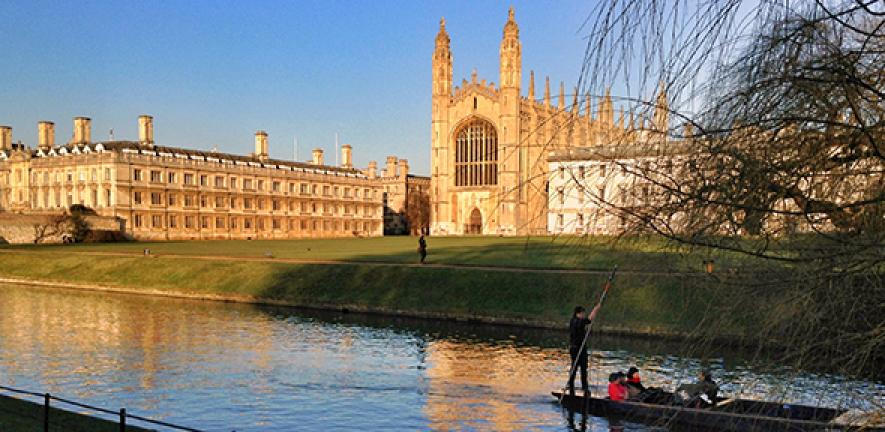
Students looking for a PhD opportunity at the intersection of artificial intelligence, hydraulic modelling, infrastructure, and environmental sustainability may find this new studentship at the University of Cambridge particularly exciting. The Department of Engineering at the University of Cambridge is offering an EPSRC FIBE3 CDT PhD Studentship titled:
Development of AI Tools for Meta-analysis of Hydraulic Models for Preventing Combined Storm Overflows (see more here)
This project is being delivered in collaboration with Ward & Burke, a leading engineering company with extensive expertise in the design, manufacture, installation, operation, and maintenance of water and wastewater infrastructure across the UK and Ireland.
Author: Dr Niaz Chowdhury (LinkedIn)
Designation: Lecturer (Computer Science)
Affiliation: Ulster University (Birmingham), UK
A PhD Project with Strong Real-World Impact
Combined storm overflows remain a major challenge in wastewater and sewage network management. Designing effective sewage network upgrades depends heavily on hydraulic models. However, one of the current problems in the field is that these models often produce outputs that vary significantly depending on the modeller, the assumptions made, the way the model is set up, and the adjustment factors used.
At present, there is no reliable global-scale framework or set of quantitative performance metrics that allows these hydraulic models to be compared properly. This creates a serious challenge for decision-makers. In many cases, infrastructure schemes are designed based on model outputs without fully understanding the quality of those outputs, whether the modelling has been sufficiently optimised, or whether better alternatives may exist.
This PhD project aims to address that gap.
What the Research Will Focus On
The core aim of the project is to develop AI-driven tools that can support the meta-analysis of hydraulic models used in sewage and catchment systems. Rather than relying on computationally expensive re-modelling, the project will use meta-analysis techniques, AI, and broader big data approaches to assess and compare model quality and intervention options in a more efficient way.
The research will seek to create methods that can help rank models and guide decisions on where further optimisation is worthwhile. This has the potential to improve how infrastructure upgrades are prioritised, especially when trying to reduce combined sewer overflows in a cost-effective and environmentally responsible manner.
Main Objectives of the Project
The project objectives include:
- developing a detailed understanding of current hydraulic modelling practice
- creating a new framework to quantitatively assess and rank different catchment hydraulic models and sewage network models
- leveraging AI and other big data meta-analysis techniques in a computationally efficient way
- providing guidance on which sites and models would benefit most from further optimisation
- assessing cost, complexity, and embodied carbon of different intervention types to support a more holistic decision-making process
- evaluating the potential of blue-green and other sustainable solutions to improve network performance
This makes the project especially attractive for students interested in combining engineering, data science, AI, environmental systems, and net zero infrastructure research.
Funding and Structure
This is a four-year fully funded studentship structured as a 1+3 MRes/PhD programme. It is funded through the Cambridge EPSRC Centre for Doctoral Training in Future Infrastructure and Built Environment: Unlocking Net Zero (FIBE3 CDT).
The opportunity is open to UK, EU, and international students. However, applicants should note that fully funded studentships covering fees and maintenance are available for eligible home students in the first instance, while a limited number of international applicants may be considered for funding later in the recruitment process.
Entry Requirements
Applicants should have, or expect to obtain before the start date, at least a high 2:1 degree, preferably at Master’s level, in a STEM subject.
This broad eligibility means that students from a range of backgrounds may be suitable, especially those with interests in areas such as:
- civil or environmental engineering
- data science or AI
- applied mathematics
- computational modelling
- water and wastewater systems
- infrastructure and sustainability
Why This Opportunity Stands Out
This studentship stands out for several reasons.
First, it is based at one of the world’s leading universities, within a highly respected engineering department. Second, it addresses a pressing infrastructure and environmental challenge with real public value. Third, it offers the chance to work with an industry partner, Ward & Burke, giving the research a strong practical dimension and clear relevance beyond academia.
For students who want to work on AI for infrastructure, smart environmental systems, or sustainable engineering solutions, this project offers a rare combination of academic depth, industrial relevance, and societal impact.
Application Information
Applications should be submitted through the University of Cambridge Applicant Portal (click here). Applicants must state the project title:
Development of AI Tools for Meta-analysis of Hydraulic Models for Preventing Combined Storm Overflows
Applicants should also note Professor Dongfang Liang as the supervisor.
There is a £20 application fee.
The university has stated that applications will be reviewed soon after they are received, which means early application is strongly encouraged. In some cases, an offer may be made before the official closing date.
Key Dates and Contacts
- Institution: University of Cambridge, Department of Engineering
- Qualification: PhD
- Location: Cambridge
- Study mode: Full-time
- Funding: Fully funded studentship (UK and International)
- Reference: NM48334
- Placed on: 19 December 2025
- Application deadline: 15 April 2026
For project-specific enquiries, applicants can contact Professor Dongfang Liang at dl359@cam.ac.uk.
For general enquiries, the contact email is cdtcivil-courseadmin@eng.cam.ac.uk.
Final Thoughts
This PhD studentship offers an excellent opportunity for ambitious students who want to apply AI and data-driven methods to solve real-world challenges in wastewater systems, infrastructure planning, and environmental sustainability. With its strong academic setting, industrial collaboration, and clear link to net zero and sustainable development goals, it is a highly attractive opportunity for future researchers in this area.